Texas Debt
Relief Programs
If your balances keep growing despite careful budgeting, you’re not alone. Texas has three of America’s four most debt-burdened metros: Austin, San Antonio, and Houston rank #1, #2, and #3 for non-mortgage debt per resident, while Dallas ranks #6.
Texans pay less for housing than residents of coastal states yet carry more debt. Many falling behind don’t realize how much Texas law limits what creditors can do.
If you have $10,000 or more in unsecured debt, CreditAssociates may help you settle your debt for less than you owe, with no loans and no upfront fees. Most clients finish in 24 to 36 months.
A Partner You Can Count On
Why Texans Trust CreditAssociates
CreditAssociates has helped people take control of overwhelming unsecured debt. Our experienced debt specialists, dedicated client support team, and innovative technology have helped thousands of consumers navigate the debt settlement process with confidence.
-
Over 20 years of experience
Two decades helping people become debt free.
-
1,000+ creditor relationships
Established connections to help negotiate qualifying debt.
-
No upfront fees
You don't pay until a settlement is reached and approved.
-
Dedicated Client Success Team
Real support with you throughout your entire program.
-
Exclusive DebtApp®
Track progress, review settlements, upload documents and manage your account 24/7.
-
Accredited by the ACDR
A member of the Association for Consumer Debt Relief.
Ready to take the first step?
How It Works
How Debt Settlement Works in Texas
Texas law already limits what creditors can do to your paycheck and home. CreditAssociates' debt relief program operates within those protections—not around them. CreditAssociates is a debt settlement company, not a lender, and Texas clients generally move through four steps during the debt settlement process.
-
1
Free consultation
A specialist reviews your debt and confirms the $10,000 minimum.
-
2
Dedicated savings account
You make one monthly deposit into an account in your name.
-
3
Negotiation
CreditAssociates negotiates directly with your creditors, and every settlement offer comes to you for approval before it is accepted.
-
4
Resolution
Debts are resolved one by one, 24 to 36 months on average.
You pay nothing upfront. Fees are charged only after a settlement is reached and approved.
Learn more about how the program worksTexas Law
Texas Debt Collection Laws Protect More Than Most States
Falling behind on debt in Texas means something different than it does almost anywhere else, because two protections most states do not offer are written directly into Texas law.
Texas Limits Wage Garnishment for Consumer Debt
The Texas Constitution (Article 16, Section 28) and Texas Property Code Chapter 42 prohibit private creditors from garnishing your wages to collect consumer debt. Even with a court judgment, a credit card company cannot garnish your paycheck in Texas. The wage garnishment Texas law does allow is narrow: child support, spousal maintenance, federal tax debt, and defaulted federal student loans.
The protection has limits, and it is worth being honest about them. A creditor can still sue you, win a judgment, and reach bank accounts and other non-wage assets. Your money is protected in your paycheck, not once it sits in an account a creditor can levy.
This is general information, not legal advice. Talk to a licensed Texas attorney about your situation.
The Texas Homestead Exemption
Texas Property Code Section 41.001 protects unlimited equity in your primary residence from most creditors, with acreage limits of 10 acres in a city and 100 to 200 acres in rural areas. With no dollar cap, it is one of the strongest homestead protections in the country.
Because of this, many Texas homeowners do not need bankruptcy to keep their house, so settlement is often the more proportionate first step.
This protection does not erase what you owe or stop a lawsuit, but it often gives Texas households more leverage than they realize.
This is general information, not legal advice. Talk to a licensed Texas attorney about your situation.
Statute of Limitations
How Long Can a Creditor Sue You in Texas?
The Texas statute of limitations on debt founded on a written contract, including credit cards, is four years. That is shorter than many states, but an account you stopped paying last year is still years from expiring.
When the Clock Starts
Generally, the clock starts at default—the first missed payment that is never brought current.
What Can Restart It
Texas protects you more than most states. Following a 2019 amendment to Civil Practice and Remedies Code Section 16.036, a partial payment alone does not restart the clock in Texas. It takes a signed written acknowledgment of the debt.
The practical effect: if a collector calls about an old balance and asks for a small “good faith” payment, that payment cannot quietly reset the statute of limitations on credit card debt in Texas. Be careful what you sign, though. A written acknowledgment still restarts everything.
What Happens After Four Years
The debt does not disappear. A creditor loses the ability to win a lawsuit on it, collectors may still contact you, and the balance can stay on your credit report under separate federal timelines.
This is general information, not legal advice.
Eligibility
Who Qualifies for Debt Relief in Texas
The program is available to Texas residents who meet the following criteria:
- Minimum debt
- $10,000 unsecured
- Availability
- Statewide in Texas
Debt we can help with
Credit cards, personal loans, medical bills, private student loans, and certain business debts
Debt we can't settle
Mortgages, auto loans, and federally backed student loans
During your free consultation, a specialist will review your debt types, total balance, and monthly budget to confirm eligibility and walk you through your options.
Check Your EligibilityBy Metro Area
Debt by City in Texas
Texas's debt burden is concentrated in some of its largest metros. In LendingTree's 2024–2026 analysis, Austin, San Antonio, Houston, and Dallas all ranked among the six U.S. metros with the highest average non-mortgage debt. Newer credit card data shows that high balances remain common across the state's major cities.
Austin $45,920 avg. non-mortgage debt
- Austin residents average $45,920 in non-mortgage debt, the highest amount among the 50 largest U.S. metros (LendingTree, 2026).
- 29.1% of Austin cardholders carry $10,000 or more in credit card debt, exceeding the 26.5% average across the 100 largest metros.
- Austin's average credit card balance is $8,055, the highest among Texas's four largest metros (Experian, 2026).
Dallas / Fort Worth $43,901 avg. non-mortgage debt
- Dallas residents average $43,901 in non-mortgage debt, ranking sixth among the 50 largest U.S. metros (LendingTree, 2026).
- 31.6% of Dallas cardholders carry at least $10,000 in credit card debt, the ninth-highest share among the 100 largest U.S. metros.
- The average Dallas credit card balance is $7,936, showing that revolving debt remains substantial even before balances reach five figures (Experian, 2026).
Houston $44,640 avg. non-mortgage debt
- Houston residents average $44,640 in non-mortgage debt, the third-highest amount among the 50 largest U.S. metros (LendingTree, 2026).
- 30.6% of Houston cardholders carry $10,000 or more in credit card debt, compared with 26.5% across the 100 largest U.S. metros.
- Houston Gen X consumers carry a median $35,179 in non-mortgage debt, the highest amount for any generation in any major U.S. metro studied.
San Antonio $44,812 avg. non-mortgage debt
- San Antonio residents average $44,812 in non-mortgage debt, ranking second among the 50 largest U.S. metros (LendingTree, 2026).
- 28% of San Antonio cardholders carry at least $10,000 in credit card debt, putting more than 1 in 4 above the five-figure mark.
- San Antonio baby boomers carry a median $19,336 in non-mortgage debt, the highest among baby boomers in the major U.S. metros studied.
Laredo & Plano 12.08% of Laredo tradelines delinquent
- Laredo ranks #8 nationally for overall debt delinquency, with 12.08% of credit tradelines delinquent in Q4 2025 (WalletHub, 2026).
- 18.31% of outstanding loan balances in Laredo were delinquent, reinforcing the city's relatively high level of repayment distress.
- Plano saw delinquency spread to nearly 18% more credit cards year over year, the second-largest increase among U.S. cities analyzed.
Why Texans Carry So Much Debt
Two pressures show up again and again in the Texas numbers, and neither is about overspending.
Auto loans are the largest driver
The state's biggest metros are spread out and built around driving, and it shows in the numbers.
- $18,303San Antonio — the highest average auto loan debt of any large U.S. metro
- $17,144Austin
- $16,357Houston
A household making two car payments before it touches a credit card has less room for everything else, and less slack when something goes wrong.
LendingTree, 2024
Medical debt is the second driver
Texas has the highest uninsured rate of any state, roughly double the national rate.
- 21.6%of Texas adults had no health insurance in 2024
- 13.6%of Texas children had no health insurance in 2024
Without coverage, one emergency room visit becomes a balance that follows a family for years.
U.S. Census Bureau, American Community Survey
Both kinds of debt are unsecured once they reach collections, and unsecured debt is what settlement is built for.
Ready to see what a settlement path could save?
A free consultation with a CreditAssociates specialist takes 15 minutes and outlines a settlement plan based on your specific debt. Call 1-800-983-6693 or request a free consultation.
Our Results
Helping People Move Beyond Debt
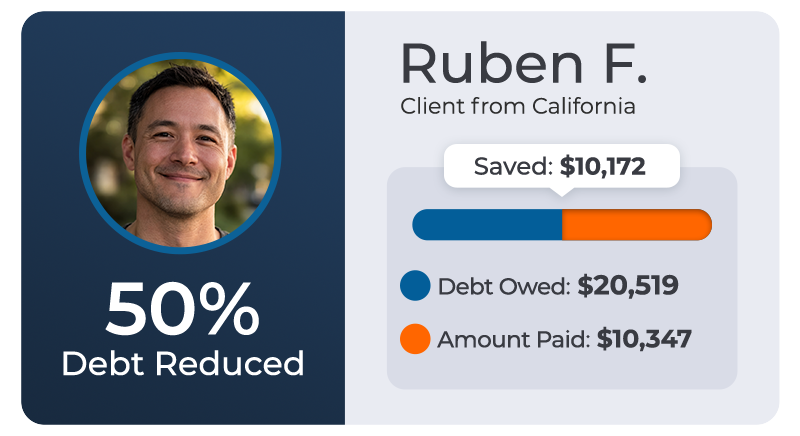
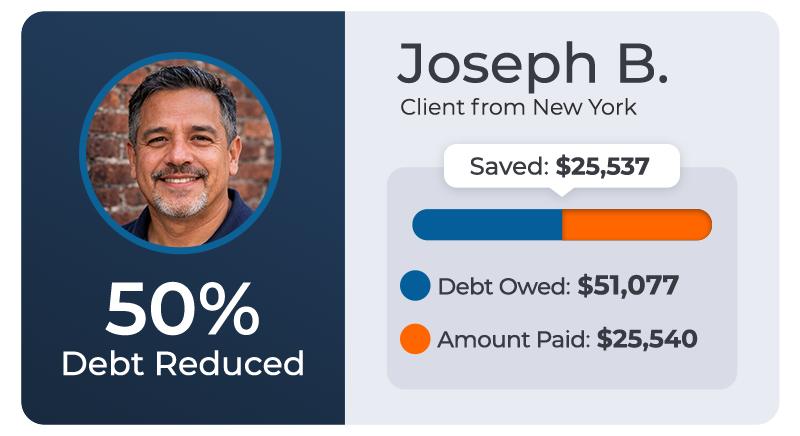
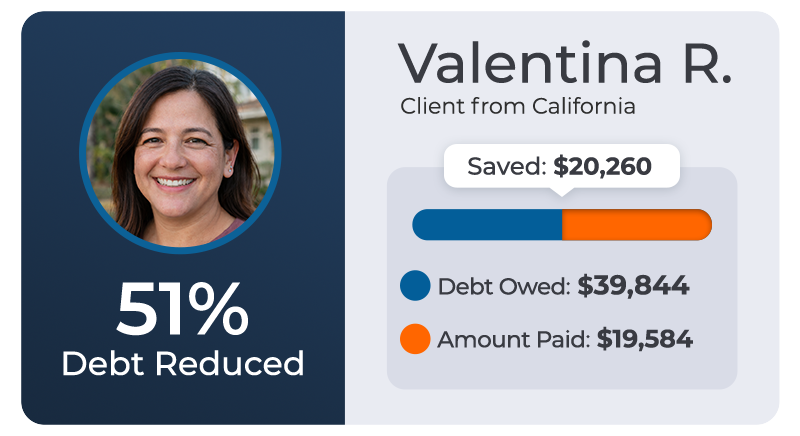
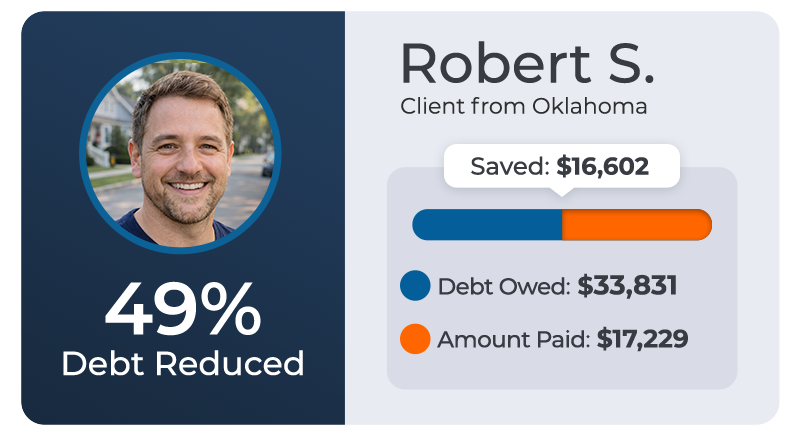
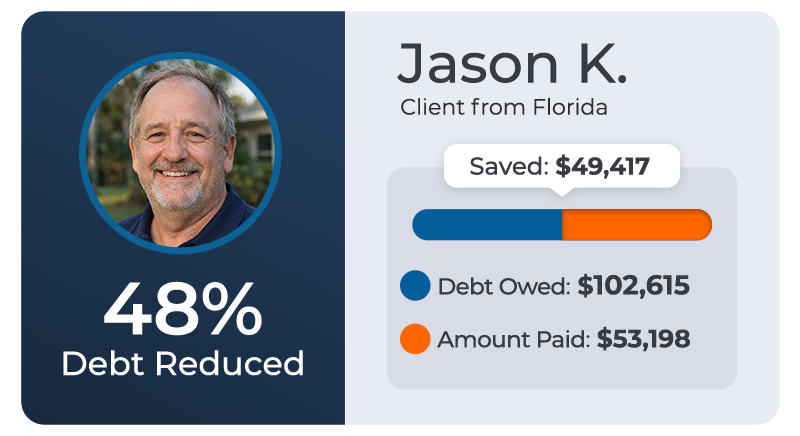
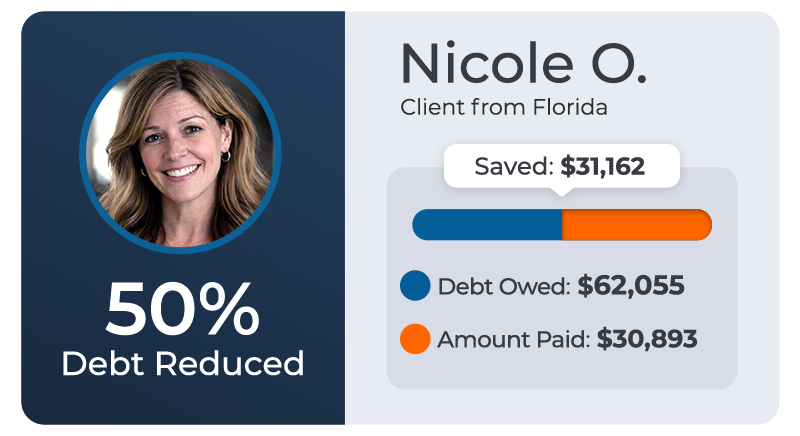
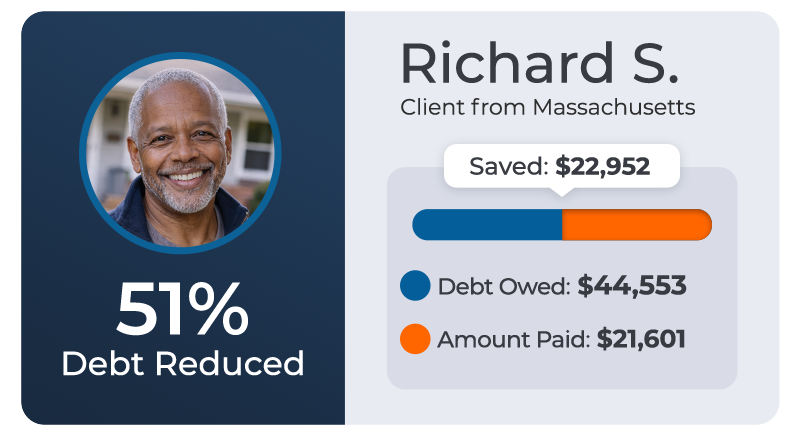
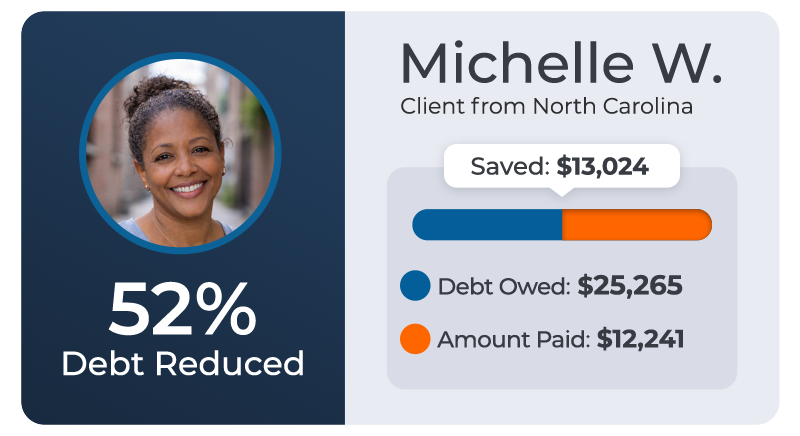
While debt is a growing challenge for many households, thousands of people across the country have successfully completed our program.
- $575M+
- in debt settled annually
- 132,000+
- settlements negotiated each year
- 13,200+
- legal settlements annually
- 10,800+
- clients graduate each year
I indicated my interest online, and Deb G. called me back within a few minutes. Not only did she explain everything well, she anticipated my questions. We're both from Texas, and I think that helped communication. An excellent experience.

James T.
Texas**
*Based on paying minimum payments and high interest rates over time.
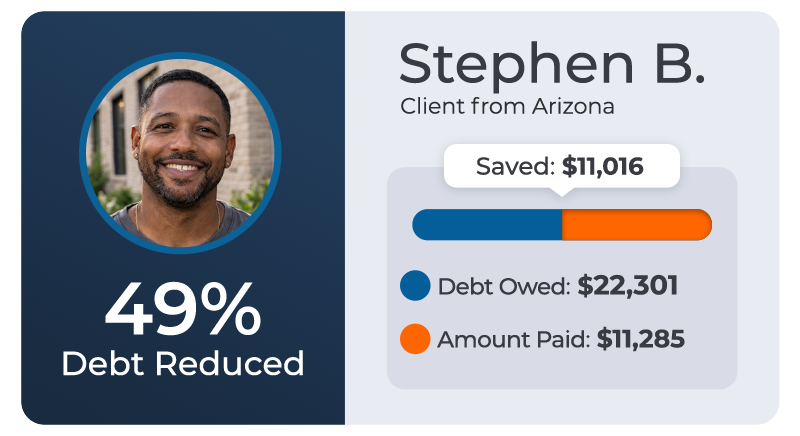
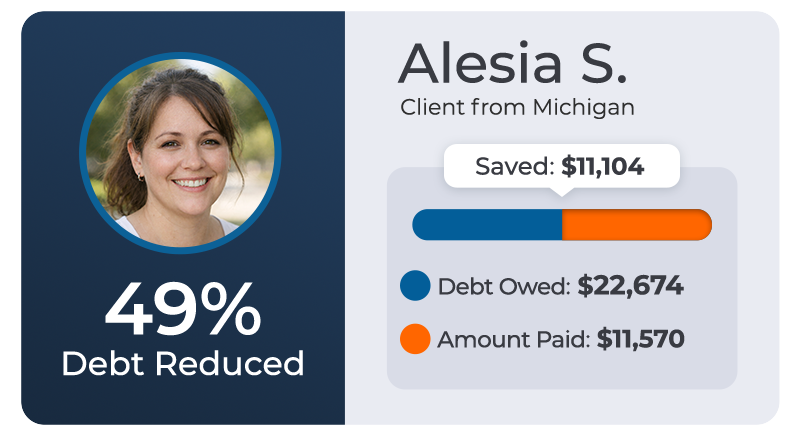
**For confidentiality purposes, the images above are not photographs of our actual clients but are representative samples of who we successfully service.
Common Questions
Frequently Asked Questions About Texas Debt Relief
What is debt settlement and how does it work in Texas?
Debt settlement means negotiating with your creditors to resolve enrolled balances for less than the full amount owed. You make monthly deposits into a dedicated account instead of paying creditors directly, and CreditAssociates negotiates settlements as the account builds. It is one of the debt relief programs Texas residents can access statewide, with no residency waiting period.
Who qualifies for the CreditAssociates program in Texas?
The Texas debt relief program starts at $10,000 in unsecured debt. A specialist confirms eligibility during a free consultation by reviewing your debt types, balances, and monthly budget. The program is available in every part of the state.
Can creditors garnish wages in Texas?
For consumer debt, no. The Texas Constitution prohibits private creditors from garnishing wages, even with a court judgment. Garnishment is still allowed for child support, spousal maintenance, federal tax debt, and defaulted federal student loans, and a judgment creditor can reach bank accounts and other non-wage assets.
This is general information only and not legal advice. Consult a licensed Texas attorney if you have specific concerns.
Does debt settlement affect my Texas homestead exemption?
No. The Texas homestead exemption protects your primary residence from most creditors regardless of how you address unsecured debt, and unsecured creditors generally cannot force the sale of a protected homestead.
This is general information only and not legal advice. Consult a licensed Texas attorney about your specific situation.
How many times can a debt collector call me in Texas?
Under federal Regulation F, a collector may not call you more than 7 times within 7 days about a single debt, and must wait 7 days after speaking with you before calling about that debt again. This is a federal rule, not a Texas one, so it applies to every collector contacting you.
Is debt settlement better than bankruptcy in Texas?
It depends on your situation. Bankruptcy stops collection through the automatic stay and can discharge debts, but it runs through federal court and stays on your credit report for 7 to 10 years. Because the homestead exemption already protects most Texas homes, many homeowners do not need bankruptcy's protections. Texas debt settlement resolves enrolled debts without a public filing, though it does not stop a creditor from taking legal action.
This is general information only and not legal advice. A licensed attorney can help you compare them.
Still have questions? A certified debt specialist can walk you through your options.
Talk With a SpecialistClient Stories
Debt Relief Results From Real Clients