

Summary
Choosing between a bank and a credit union impacts current and future finances; differences in operations and services are crucial.
Banks are for-profit, offering a wider range of services; credit unions are member-run nonprofits, focusing on member services with lower fees.
Banks provide more branches/services and online banking; credit unions offer higher interest rates and typically lower fees.
Compare interest rates, fees, customer service, etc., to find the best financial institution.
CreditAssociates® can help reduce credit card debt by up to half.
Are you looking to open a new bank account? It’s easy to get swayed by flashy phone apps or promises of high interest rates, but there are more than just surface-level differences you need to consider before making your choice. Choosing between a traditional bank or a credit union is an important decision that can significantly impact your current and future finances.
In this blog post, we’ll talk about the core differences between banks and credit unions, how they operate differently from each other, what factors affect their services, and ultimately why it matters which institution you choose for your financial needs. Read on for all the details!
Understanding the differences between banks and credit unions
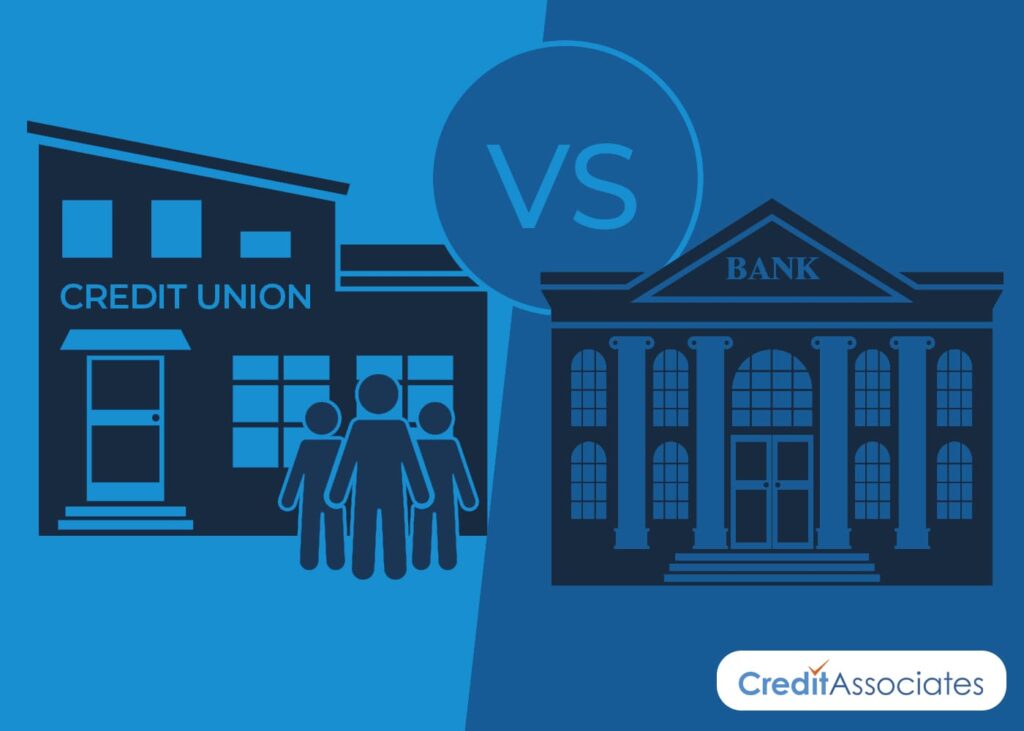
Banking is integral to modern life, and choosing where to keep your money is very important. That’s why it’s helpful to understand the differences between traditional banks and credit unions when deciding where to store your money. Banks are for-profit institutions that use customer deposits for investments and loaning opportunities. At the same time, credit unions tend to be member-run nonprofits and focus primarily on providing financial services to their members.
Banks generally offer a more comprehensive range of products and services than credit unions, such as brokerage services and trust accounts. Credit unions tend to be more accessible, offering lower interest rates on savings/loans/credit cards, fewer account requirements/fees, and personalized customer service. Still, they also often come with high account minimums and fees.
So if you’re considering opening a new bank account or taking out a loan, understanding the difference between banks and credit unions can help you choose the best option.
Explore the advantages of using a bank or a credit union
Choosing between a bank and a credit union can be confusing initially, but both offer unique benefits. A bank will likely have more branches and services available, including convenient online banking features. On the other hand, credit unions often boast higher interest rates for customers and typically come with lower fees.
Ultimately, it depends on what customer service you value most and whether that comes in access to more products or lower costs. With careful research, you can find a financial institution that will meet your needs most conveniently.
Compare their features
When selecting a financial product, comparing features such as interest rates, fees, customer service, and more is important. By comparing different products offered by various agencies and institutions, you can ensure that you’re getting the best value and most comprehensive coverage for your money.
Looking specifically at interest rates can help ensure that short-term costs stay within long-term savings or investment growth. Other things such as fees, customer service ratings and reviews, working hours, accessibility, and policies should all be considered so that you know you’re making the right decision.
How to choose which type of financial institution is right for you
There is much to consider when looking for the right financial institution to meet your needs. Each financial institution has advantages and drawbacks, whether a bank or a credit union. Thus, comparing their services, fees, and other factors is important to decide which one best meets your individual requirements.
Do your research to ensure you get the products and services you need for a low cost. Don’t forget to read reviews and compare customer service ratings —these can easily help you pick the right financial institution for your unique needs.
CreditAssociates can help
At CreditAssociates, we understand that your overall financial well being is critical. That’s why our team of professional consultants is available to provide guidance and support about our program every step of the way. Contact us today to learn more about our services and how we can help you make the best decision for your financial situation.
Frequently asked questions about banks and credit unions
What kinds of services do banks and credit unions offer?
Banks usually offer products such as checking accounts, savings accounts, investments, loans, mortgages, insurance, and more. Credit unions typically provide similar services but often with lower interest rates on savings/loans and fewer fees.
How do I know which type of financial institution is best for me?
It depends on your needs. A bank may be the better choice if you’re looking for convenience or extensive customer service options. However, a credit union might be more suitable for you if you’re looking to save money on banking fees or earn higher interest rates on savings/loans. Ultimately, it’s essential to compare the features of different banks and credit unions so you can make an informed decision.
Is it possible to have accounts at both banks and credit unions?
Yes, many people have accounts at banks and credit unions to take advantage of each offer’s benefits. Ensure you understand the terms and conditions of the products before making any financial decision. It’s important to keep in mind that you may need to manage multiple accounts and follow different policies with each institution.