

Summary:
Minimum payments on credit cards primarily cover interest charges, resulting in a slow reduction of the principal balance and keeping you in debt longer.
Relying on minimum payments leads to extended repayment timelines, increased interest costs, and a sense of minimal progress, which can be discouraging for borrowers.
Increased payment amounts, debt avalanche or snowball methods, and debt consolidation options are effective strategies for breaking free from the minimum payment trap.
Additional tips to accelerate debt repayment include seeking supplemental income, allocating windfalls toward debt, and strategically using balance transfers with 0% introductory APR periods.
CreditAssociates® can help you escape the cycle of minimum payments and overwhelming credit card debt through proven debt settlement strategies. Schedule a free consultation today to explore your options and take control of your financial future.
Imagine the relief you feel when you make the minimum payment on your credit card bill. There’s a sense of temporary achievement until you realize your balance has barely decreased. This scenario is all too common and highlights the deceptive comfort of minimum payments, which often keep consumers locked in a perpetual debt cycle. This article will explore how minimum payments work, analyze their impact on debt repayment, and explore more effective strategies for clearing your credit card debt.
The Role of Minimum Payments
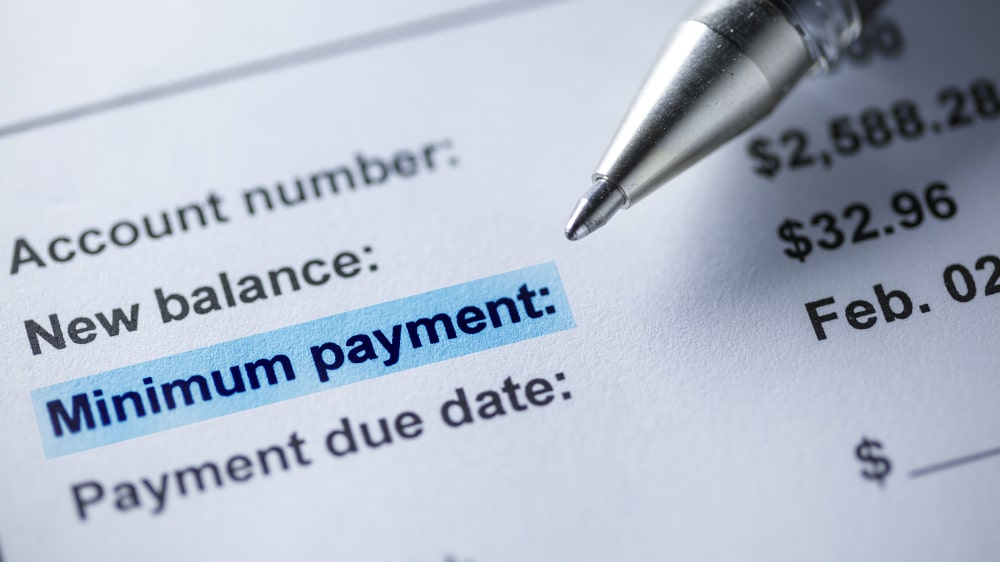
Minimum payments represent the smallest amount you are allowed to pay on your credit card balance each month to avoid penalties and maintain good standing with your credit provider. Typically, this amount is calculated as either a percentage of your total balance or a fixed minimum dollar amount — whichever is higher. This payment structure is strategically designed to extend the repayment period, ensuring that interest charges accumulate, which can substantially increase the cost of the debt over time.
The Long-Term Drawbacks of Minimum Payments
Relying solely on minimum payments to manage credit card debt can lead to several adverse long-term effects that prolong the debt and intensify the financial burden. Understanding these impacts is essential for anyone seeking to manage their finances more effectively.
Extended Repayment Timelines
Making only the minimum payment means you primarily pay the interest and only a tiny fraction of the principal amount. For instance, paying off the entire amount on a $5,000 credit card balance with an 18% annual interest rate and a 2% minimum payment could take over a decade. The extended timeline results from how minimum payments are structured to keep the repayment period as long as possible, benefiting the creditor through continued interest accrual.
Increased Interest Costs
The more extended repayment period also results in significantly higher total interest costs. Using the earlier example, you could pay thousands more than the original amount borrowed if you only make the minimum payments on a $5,000 balance. This can be illustrated by a simple amortization calculator or a detailed table showing how the majority of each payment initially goes toward interest rather than reducing the principal.
Limited Progress and Motivation
The slow pace at which the principal balance decreases can be disheartening. Seeing that your efforts are making only a minor dent in the debt can diminish motivation and potentially lead to neglecting payments. This lack of visible progress can discourage borrowers from continuing their repayment efforts or from taking more aggressive actions to eliminate debt.
Breaking Free from the Minimum Payment Trap
Escaping the cycle of minimal payments and moving toward a debt-free future requires adopting more effective strategies for paying off debt. Here are several practical approaches that can accelerate your path out of debt:
Increase Payment Amounts
Making even small increases in your monthly payments can significantly impact the total interest cost and the duration of the debt. For instance, increasing your monthly payment by just $50 on a $5,000 credit card balance with an 18% interest rate could reduce the repayment time by several years and save you substantial interest. This approach shortens the debt period and builds momentum to reduce the balance quickly.
Debt Avalanche/Snowball Methods
Two effective strategies stand out when tackling credit card debt: the debt avalanche and debt snowball methods. Each approach has its unique benefits and can help you manage and ultimately eliminate your debt more efficiently:
- Debt Avalanche: This method involves paying off debts with the highest interest rates first while maintaining minimum payments on others. It is highly effective in reducing the amount spent on interest over time.
- Debt Snowball: Unlike the avalanche method, the snowball method focuses on paying off debts with the smallest balances first. This strategy can offer psychological wins, boosting motivation as each smaller debt is cleared.
Debt Consolidation
Consolidating multiple debts into a single loan or transferring various credit card balances to one card with a lower interest rate can simplify your payments and reduce the interest rate. Debt consolidation loans often offer lower rates and a fixed repayment schedule, which can make budgeting more accessible and help avoid the pitfalls of revolving credit cycles found with credit cards.
Budgeting and Expense Tracking
Creating a comprehensive budget and tracking your expenses are crucial in identifying areas where you can cut back and redirect funds toward debt repayment. Tools like budgeting apps can help monitor expenditures in real-time, making it easier to stick to financial goals and allocate more resources to paying off debt.
Additional Tips and Strategies for Accelerating Debt Repayment
To further enhance your debt repayment efforts and break free from the burden of credit card debt sooner, consider these additional strategies that can amplify your progress.
Supplemental Income
- Freelance Work: Leverage your skills by taking on freelance projects. Platforms like Upwork, Freelancer, and Fiverr offer opportunities to earn extra money that can be used to pay down debt.
- Selling Unused Items: Assess what items you no longer need or use, such as electronics, clothing, or furniture, and sell them online through platforms like eBay, Craigslist, or Facebook Marketplace. This is a quick way to generate additional funds that can be used to reduce your debt.
Windfalls and Bonuses
- Allocate Unexpected Gains: Any unexpected windfalls, such as tax refunds, work bonuses, or monetary gifts, should be considered opportunities to reduce debt significantly. Applying these amounts to your debt can decrease the principal balance much faster, reducing the accrued interest.
Balance Transfers
- Using 0% Introductory APR Offers: Look for credit cards that offer a 0% introductory APR on balance transfers. Transferring your high-interest credit card debt to these cards can save you from paying interest during the introductory period (often 12 –18 months). This strategy allows you to pay down the principal faster since your entire payment goes toward reducing the balance, not covering interest charges.
- Strategic Planning: Be mindful of balance transfer fees and plan to pay off the transferred balance within the introductory period to avoid high rates after the introductory phase.
Implementing these strategies can significantly accelerate your journey out of debt. Each option helps reduce your current debt faster and builds a more secure financial foundation for the future. By taking proactive steps and making intelligent financial decisions, you can manage and eliminate your debt more efficiently.
Reduce Your Debt With CreditAssociates®
Need help with high credit card debt and feeling stuck in the cycle of minimum payments? CreditAssociates® can help. We specialize in helping individuals break free from debt and regain control of their finances. Our experienced team will work tirelessly to negotiate with your creditors, substantially reducing the total amount you owe. Schedule a free consultation today to see how we can help you regain control of your finances and start living a life free from the burden of overwhelming debt.
Common Questions
How does making only minimum payments affect my ability to get new credit?
Making only minimum payments can signal to lenders that you are struggling financially, making it harder to obtain new credit. Lenders look at payment behavior as an indicator of financial health, and minimum payments might not reflect positively on your creditworthiness.
What happens if I miss a minimum credit card payment?
Missing a minimum payment can lead to late fees, penalty interest rates, and negative marks on your credit report. If missed payments continue, your account could eventually be sent to collections, significantly damaging your credit score and affecting your ability to borrow money.
Can increasing my monthly payment impact my credit score?
Yes, increasing your monthly payment can positively impact your credit score by lowering your credit utilization ratio, which is a significant factor in credit scoring. Lower utilization rates signal good debt management skills, making you more appealing to lenders and potentially leading to a higher credit score.